
Start Planning
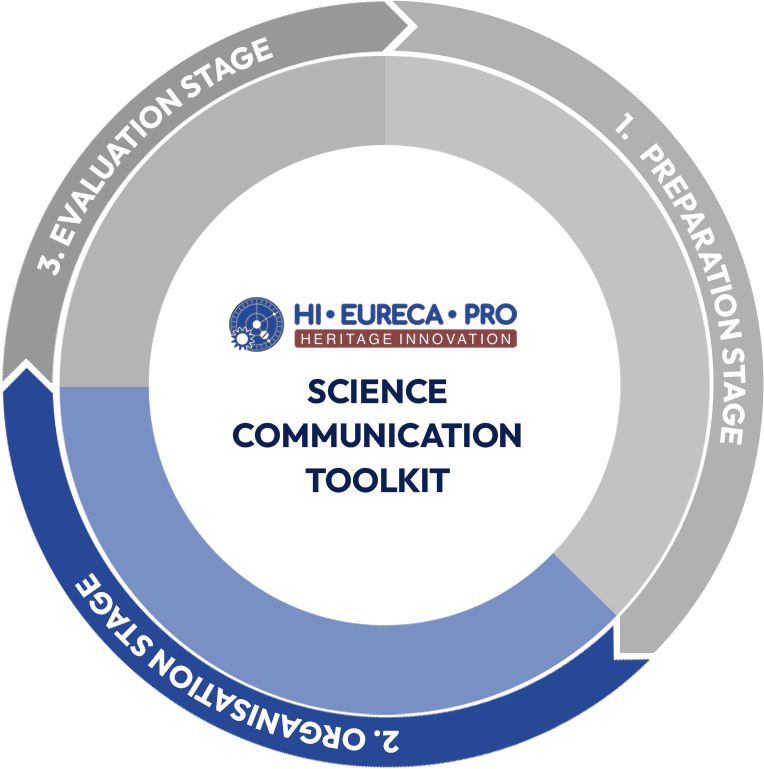
2. Organisation Stage
Time
Plan with sufficient lead time: Aim for at least 3–4 months of preparation, depending on the format and complexity of the event.
Define key milestones early:
- Defining the topic and concept (e.g. 3–4 months in advance)
- Confirm speakers
- Book venues
- Launch promotional activities (at least 4–6 weeks before the event)
- Follow-up including evaluation and documentation/reporting (e.g. at least 1 week after the event)
Include buffer time: Reserve 10–20% of the total timeline to handle delays in approvals, design, coordination, etc.
Use time management tools: Tools like Trello, Asana, or Gantt charts help visualize tasks and deadlines.
Language
Adapt language to different heritage types:
- Use domain-specific language depending on the heritage focus (e.g. cultural, mining, industrial).
- Cultural heritage may involve emotional or symbolic language, while industrial heritage might require more technical or historical framing
Consider multilingual communication needs (HI-EURECA-PRO involves multiple languages and countries) :
- Provide translations or bilingual materials (e.g. English and local language)
- Avoid idioms and culture-specific references that do not translate well
- Use plain, international English for broad accessibility
Adjust to varying levels of expertise (Tailor complexity to your audience) :
- For non-experts: use analogies, visuals, and short sentences
- For mixed groups: combine simplified explanations with optional deep-dive content (e.g. expert boxes, links)
Create terminology glossaries across languages
- Provide key terms in multiple languages, especially for terms specific to heritage, technology, or research practices, to ensure shared understanding
Be sensitive to regional identities and narratives
- Respect and reflect local language use, identity, and memory—especially in heritage contexts involving contested histories or emotional topics
Framework
- Promotion & public relations
- Budget planning
- Technical infrastructure
- Visualization methods (VR/AR, infographics)